 EN
EN

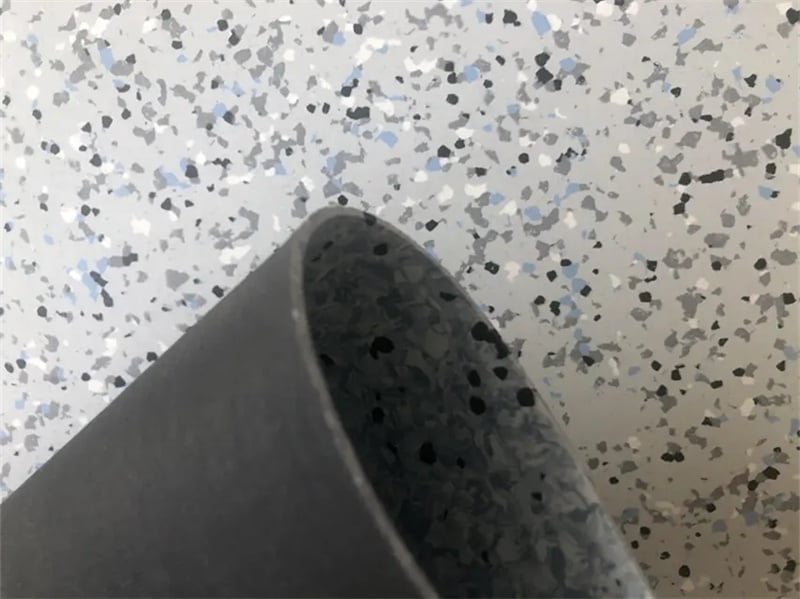
Two issues that need to be solved in both semiconductor factories and medical devices as well as in aerospace electronics are particulate contamination and electrostatic discharge. A cleanroom grade ESD work table does both, it will keep sensitive components safe from particle contamination and static electricity, and has a work surface. Quality and compliance must be maintained with the safe use of these special work stations and it is important to understand how these work stations are used to ensure the safety of the components.
Dual Protection: Cleanroom Standards and ESD Control
Two sets of requirements are satisfied to develop cleanroom grade ESD work tables. On the one hand, the cleanroom standard dictates that there should be little particle generation, and low outgassing. On the other hand, safety dictates static dissipation in ESD. A well-designed and well-made ESD work table should be able to cope with the challenges.
The material used for the construction of the work surface is typically materials with good particle shedding resistance, and static dissipative characteristics. Some systems can be used to handle wafers and for diagnostics and wafer-to-chip assembly and are usable for ISO Class 7 cleanroom environments. The frame of the table has a conductive powder coating which forms a passive grounding path for static to flow through the metal frame in a safe manner. The dual purpose design will help to keep contamination or static risk from the workstation itself from occurring.
The cross-linked polymer materials will be volume dissipative, so there will be no possibility of the mat outgassing and thus contaminating the cleanroom area. This is especially critical in semiconductor manufacturing and medical device manufacturing where VOCs may impact product quality and/or patient safety.
Protecting Components from Hidden ESD Damage
The most dangerous of electrostatic discharge is that it can cause damage and go undetected at the time. If the first test passed and then it failed in the field due to ESD, it could result in a costly return and lead to customer dissatisfaction. Cleanroom class ESD work tables can provide the risk of ESD in a consistent and reliable manner.
Surface resistance of static-dissipative laminate is 10⁶ Ohm to 10⁹ Ohm which meets I.E.C. 61340-5-1 and ANSI/ESD S20.20 . Some systems have a double-layer design, with one layer being conductive (in order to provide a good electrical connection to ground) and another dissipative (in order to control the discharge rate). It's a controlled dissipation without damaging discharges in a split second and won't allow static charges to build up.
Cleanroom-Grade ESD work tables are constructed from materials that do not contain harmful chemicals like halogens, lead, arsenic, barium, phthalate plasticizers and more. This makes them RoHS compliant and appropriate for use in an environment where out gassing/out contamination is critical.
Integrated Grounding Systems for Comprehensive Safety
The cleanroom grade ESD work table is not the only part of an ESD Protected Area; it is actually the heart of an entire ESD Protected Area. Wired to wrist straps and floor mats and other electrical work equipment, via a Common Point Ground, keeping the electrical potential the same throughout the workspace. The integration will eliminate any voltage differences which could cause damaging discharges.
According to ESD best practices, all conducting elements in the work area should be tied to a single point of electrical ground (worksurfaces, people and equipment). The resistance to ground for a mat or worksurface should not exceed 1 x 10⁹ ohms and personnel resistance to ground should not exceed 3.5 x 10⁷ ohms. When each element is properly bonded there will be no potential difference between the items and the items can be handled without causing ESD damage.
Quality manufacturers perform many different measurements at various ESD measuring points prior to delivery, and provide written verification that the workstation meets the required discharge resistance levels. This documentation has the benefit of making auditing easy and shows the electronics manufacturers' commitment to quality.
Supporting Compliance with Industry Standards
The manufacturers have imposed stringent requirements on the ESD work tables, which are available to meet the requirements of cleanrooms. The table's format is designed to meet requirements of ANSI/ESD S20.20-2021 and IEC 61340-5-1. Compliance is a business need in the semiconductor and medical device business.
ESD workstations have several qualification and lot-to-lot tests that need to be conducted. The tests include integrity of structure, electrostatic properties (worksurface resistance, charge generation, terminus to terminus resistance), grounding and bonding, outgassing and flammability. Materials have to comply with flame test and oxygen index. ESD protective symbols and common point ground symbols need to be applied to workstations .
With regular ESD protection, it is possible to reduce latent defects and catastrophic failures. If the discharge is not diagnosed, a loss of a field may be incurred, which is more costly than a good work station. Cleanroom grade ESD work tables are the basic "ground" standard of component safety and conformance to regulatory requirements.
With the strict requirement of the cleanroom application and electronics manufacturing, Shanghai Herzesd Industrial Co., Ltd. offers a wide range of Cleanroom Grade ESD Work Tables to meet those specifications. With over 10 years of international trade and experience with ESD protection solutions that maintain sensitive components' protection, Herzesd is ESD knowledgeable, compliant to IEC 61340-5-1 and ANSI/ESD S20.20. Contact us for a discussion of your ESD Work Table needs in the cleanroom.