 EN
EN

What Is ESD PVC Flooring?
Electrostatic discharge (ESD) can seriously damage sensitive electronic components, reduce product quality, and even interrupt production. To prevent these problems, many electronics manufacturers, cleanrooms, laboratories, and data centers install ESD PVC flooring as part of their electrostatic protection system.
In this guide, we'll explain what ESD PVC flooring is, how it works, where it is used, and how to choose the right type for your facility.
What Does ESD Mean?
ESD stands for Electrostatic Discharge. It refers to the sudden transfer of static electricity between two objects with different electrical potentials.
Although static electricity is usually harmless to people, it can permanently damage electronic components such as:
- Printed Circuit Boards (PCB)
- Semiconductors
- Integrated Circuits (IC)
- Precision electronic instruments
For this reason, ESD control is essential in electronics manufacturing and other static-sensitive industries.
What Is ESD PVC Flooring?
ESD PVC flooring is a permanent anti-static flooring solution manufactured with conductive materials evenly distributed throughout the flooring body. Unlike ordinary PVC flooring, it continuously dissipates static electricity and helps maintain a controlled electrostatic environment.
Depending on the application, ESD PVC flooring is available in two types:
- Conductive Flooring (typically 10⁴–10⁶ Ω)
- Static Dissipative Flooring (typically 10⁶–10⁹ Ω)
Both types are widely used in Electrostatic Protected Areas (EPAs).
How Does ESD PVC Flooring Work?
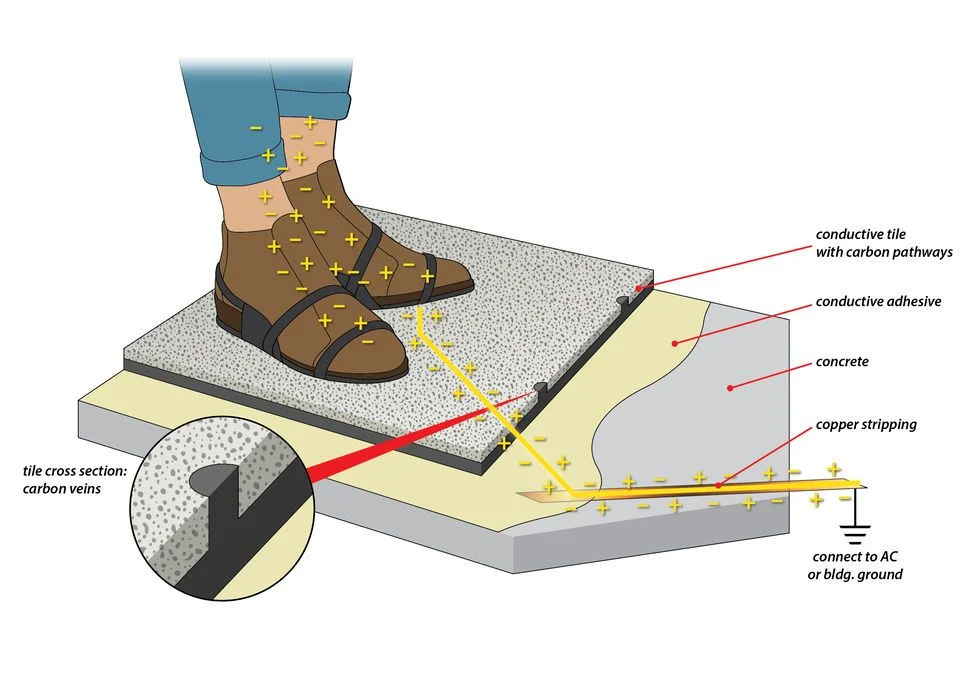
ESD flooring does not "eliminate" static electricity. Instead, it provides a controlled path that allows static charges to safely flow through the flooring and grounding system.
A complete ESD flooring system usually includes:
- ESD PVC Flooring
- Conductive Adhesive
- Copper Foil
- Grounding System
When properly installed, the entire system helps prevent static accumulation and protects sensitive equipment.
Benefits of ESD PVC Flooring
Compared with standard commercial flooring, ESD PVC flooring offers several advantages:
- Permanent anti-static performance
- Stable electrical resistance
- Excellent wear resistance
- Easy cleaning and maintenance
- Long service life
- Suitable for high-traffic industrial environments
- Available in tile and roll formats
- Multiple colors and OEM customization options
Where Is ESD PVC Flooring Used?
ESD PVC flooring is widely used in industries where electrostatic control is required, including:
- Electronics manufacturing
- SMT production lines
- Semiconductor facilities
- Cleanrooms
- Laboratories
- Data centers
- Pharmaceutical plants
- Medical device manufacturing
- Telecommunication rooms
How to Choose the Right ESD Flooring?
When selecting ESD flooring, consider the following factors:
- Required resistance range
- Conductive or static dissipative type
- Tile or roll format
- Floor thickness
- Installation environment
- Compliance with your ESD control requirements
Working with an experienced supplier can help ensure the flooring matches your project's technical specifications.
Conclusion
ESD PVC flooring plays an important role in protecting sensitive equipment and maintaining a safe electrostatic environment. By choosing the appropriate flooring type and installing it correctly, manufacturers can improve product reliability, reduce ESD risks, and support long-term production stability.
Whether you need conductive or static dissipative flooring, selecting a reliable supplier and complete installation system is essential for achieving consistent performance.
Related Products
- ESD PVC Flooring
- Conductive Adhesive
- Copper Foil
- ESD Floor Mat
Call to Action
Looking for a reliable ESD PVC flooring supplier?
HERZESD provides conductive and static dissipative PVC flooring in tile and roll formats, along with complete installation accessories and OEM customization services.
Contact us today for pricing, samples, or technical support.