 EN
EN

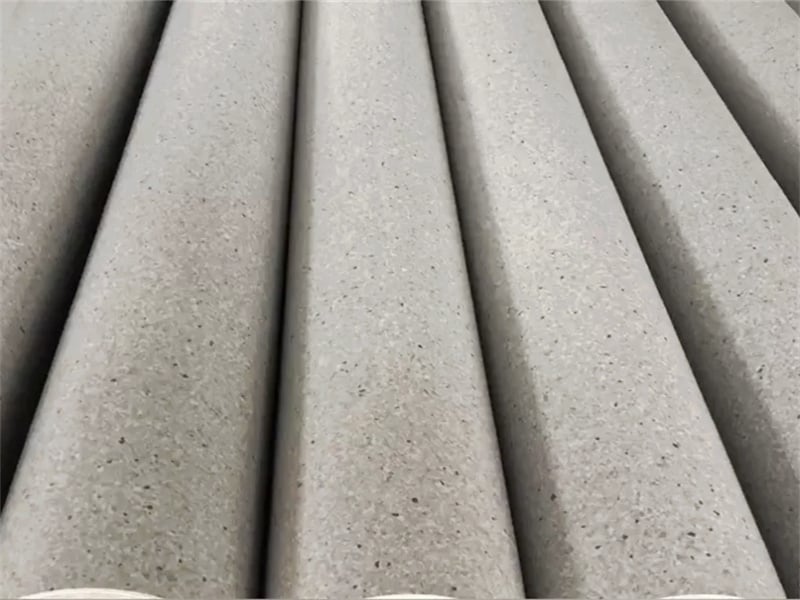
Many facility managers are mainly concerned with the initial cost of an anti static floor when choosing one. But this ignores the even more important consideration: the maintenance costs over the long run. The anti-static floor system is low-maintenance and offers equally significant life-cycle savings by minimizing labor, consumables and downtime. To make sound procurement decisions, it is important to understand these economics.
The High Cost of Wax-Dependent Floors
One of the biggest hidden expenses of anti static flooring is the need to wax or polish the floor periodically. For instance, some vinyl tiles are not warranted unless the customer has to reapply the multiple coats of special antistatic floor polish regularly. The need for this constant requirement perpetuates maintenance issues.
This has serious economic consequences. A case study on a tile floor demonstrated that buffing and cleaning costs went up by 41% to $2,400 per month from $1,700 per month when the need for more frequent buffing was needed to maintain appearance. This equated to an annual cost of almost $29,000 per 20,000 SF.
The problem is many static dissipative vinyl tiles are only topically finished for ESD. It's not the floor that does the polish, it's the polish that does the work. As this wax wears off, resistance may become out of spec and necessitates frequent stripping and reapplication, which slows down production and increases expense. These maintenance costs can add up to a costly burden over the 10 years of the floor's life.
Permanent Conductivity Eliminates Wax Cycles
At the material level, however, low-maintenance anti static flooring solves this problem. Static-control properties are inherent in the material and not added as a surface treatment to the floor. Floors with permanent conductivity are made of rubber, some vinyl compounds or special polymer surface finishes.
The permanent conductivity will not require frequent waxing or special finishes. Cleaning and routine care is the only maintenance required. One facility that installed permanent conductive tile saved more than 40% on floor maintenance costs, and even increased its ESD control; an annual savings of about $12,000.
The difference in the amount of maintenance is quite large. Unlike wax floors, permanent conductive floors don't need the "regular buffing" or "costly conductive rejuvenators" . . . This directly equates to lower labour costs, lower consumable costs and less disruption to the facility.
Durability and Reduced Repair Costs
The anti static flooring systems tend to be low maintenance, which helps to minimize long-term costs. For instance, rubber flooring may be very durable, require very little maintenance and have a lower total cost of ownership even though the material costs more.
However, epoxy floors, which are at first maintained low, are notorious for being costly and challenging to fix. Equipment-induced scratches and gouges cannot be buffed out and repairs are hard to coordinate as a result of UV discoloration. Epoxy repairs in occupied areas take 2-3 days to install and dry, adding costs in the background and causing disruption.
A benefit of modular flooring systems is their convenience in maintenance and repair. Interlocking tiles enable damaged areas to be replaced without any interruption or smell of downtime. This modularity, along with the permanently conductive nature, results in a predictable life cycle cost, and in some product lines offers a lifetime performance warranty.
Calculating Long-Term Savings
The cost of anti static flooring includes more than just the price of the floor installation. A comprehensive 10 year cost comparison for a 1,000 m2 facility showed that while the initial cost of the anti static flooring floor was 25% to 40% higher, the lower maintenance and repair cost meant that total savings were around 12% over the 10 year life cycle.
The following factors are in favor of low maintenance flooring:
Less cleaning effort and cleaning materials, which are estimated to be 30% of the savings every year.
Less performance testing as resistance is stable with permanent conductivity floors .
Fewer repairs as a result of better wear and impact resistance
Reduced maintenance/comparison downtime
When considering the cost savings from downtime, the permanent conductivity flooring systems can pay for themselves in high traffic facilities or in facilities that operate around the clock.
Shanghai Herzesd Industrial Co., Ltd. provides a complete solution of low maintenance anti static flooring products to meet the requirements of electronics manufacturing and clean room. Herzesd's international trade expertise provides reliable ESD protection, helping to lower facility costs over time. Please contact us to discuss your anti static flooring needs.